Human memory doesn’t work like a filing cabinet, storing complete, unchanging records to be retrieved intact later. It’s reconstructive, selective, and prone to a specific, well-documented set of errors and biases. When researchers attempt to build computational models of memory and learning, these peculiarities become a genuine design challenge, and the attempt to replicate them reveals a great deal about memory’s actual character.
Why memory is harder to model than it first appears
A naive model of memory might simply store every input exactly as received and retrieve it on demand, closer to how a computer’s hard drive works. Human memory does not function this way. Information is encoded selectively, often distorted by prior expectation, and reconstructed at the moment of recall rather than played back intact, which is part of why eyewitness memory, for instance, is now understood to be considerably less reliable than once assumed. A cognitive model aiming to genuinely capture human memory needs to reproduce not just correct recall, but the specific, predictable pattern of errors human memory reliably produces under particular conditions.
Neural networks and a loose, often overstated analogy
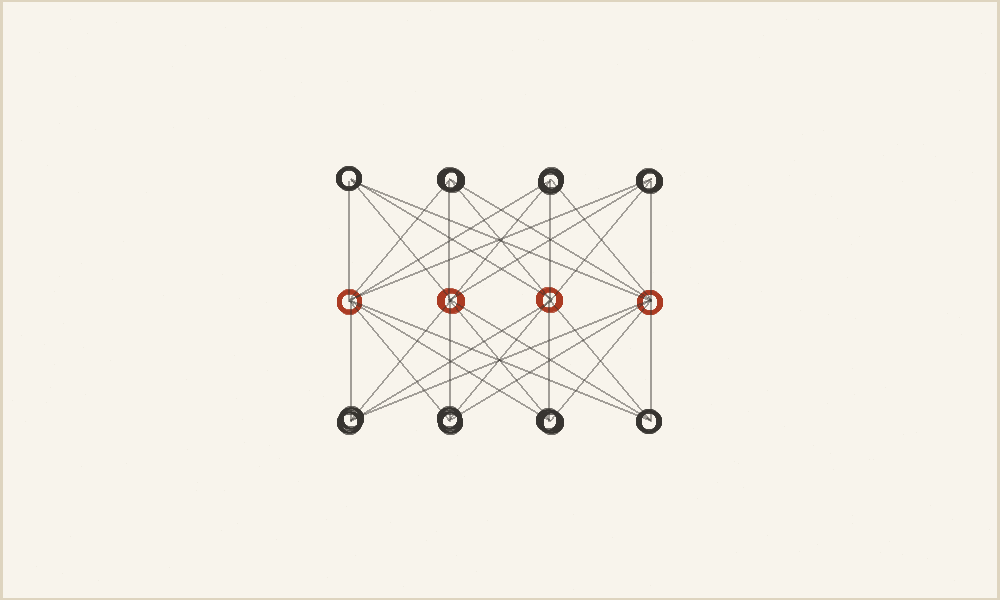
Modern machine learning systems are often built using artificial neural networks, loosely inspired by the brain’s networks of interconnected neurons. This inspiration is frequently overstated in popular explanation; artificial neural networks are a considerable simplification of actual biological neural circuitry, and most cognitive scientists are careful to treat the analogy as a useful starting metaphor rather than a literal claim that these systems replicate how biological brains actually learn. Where the comparison has proven more genuinely productive is in studying how both systems adjust internal connections in response to repeated input, a shared general principle, even though the specific biological and computational mechanisms involved differ considerably in detail.
Catastrophic forgetting: a revealing failure
One particularly instructive example is a known limitation in many machine learning systems called catastrophic forgetting, where a network trained on a new task can abruptly lose much of its previously learned performance on an earlier one, a dramatic failure mode with no clean equivalent in typical human learning. Investigating why artificial systems are prone to this failure, while human memory is comparatively resistant to it, has pushed researchers to look more closely at mechanisms in human memory — including how sleep appears to help consolidate and protect existing memories during new learning — that artificial systems generally still lack.
What forgetting and compression suggest about memory’s purpose
Forgetting in human memory is not simply a flaw to be engineered away; many cognitive scientists argue it serves a genuine function, helping to generalize useful patterns from specific experiences rather than retaining every detail indiscriminately. Some computational models deliberately incorporate a form of controlled forgetting or compression for a similar reason, finding that retaining literally everything can actually impair a system’s ability to generalize to new situations. This parallel suggests that selective forgetting may be a functional feature of intelligent systems generally, biological or artificial, rather than simply a human limitation to be corrected.
What this comparison leaves genuinely unresolved
Despite real points of productive comparison, significant and unresolved gaps remain between artificial and human memory, including how efficiently humans can learn from a single meaningful experience, something most current AI systems still require vastly more repeated examples to approximate. Rather than treating these systems as functioning replicas of human memory, the more defensible, and more interesting, use of this research is as a comparative tool — one that sharpens exactly which features of human memory are genuinely distinctive by examining where artificial attempts to replicate them most clearly fall short.