Cognitive Behavioral Therapy, or CBT, is one of the most extensively researched forms of talk therapy, and its central premise is straightforward: our emotional reactions are shaped less by events themselves than by the automatic thoughts we have about them. Two people can face the identical setback and walk away with very different feelings, depending on what they silently told themselves about it.
Where CBT came from
CBT developed in the 1960s, largely through the work of psychiatrist Aaron Beck, who noticed that his depressed patients tended to have a consistent stream of negative automatic thoughts running beneath their conscious awareness — thoughts about themselves, the world, and the future that they rarely questioned, yet that strongly shaped their mood. Around a similar time, psychologist Albert Ellis was developing a related approach, Rational Emotive Behavior Therapy, built on much the same core idea. Both approaches represented a significant shift from the purely psychoanalytic therapies that dominated before them, toward something more structured, present-focused, and testable.
The thought-feeling-behavior triangle
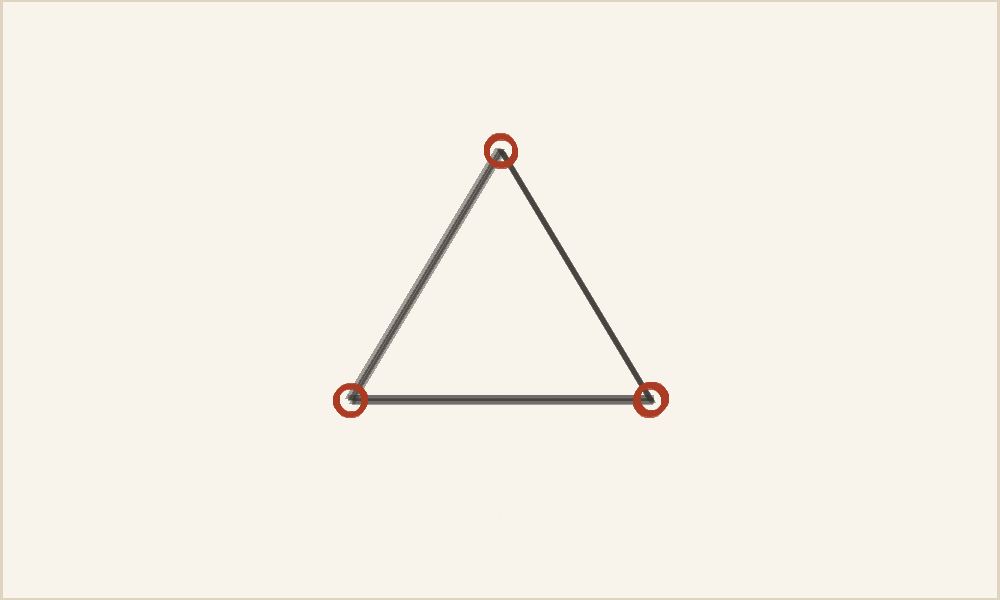
CBT models this as a triangle: thoughts, feelings, and behaviors, each influencing the others. A missed reply to a text might trigger the automatic thought that they’re upset with you, which produces anxiety, which then drives the behavior of over-apologizing or withdrawing — confirming, in the person’s mind, that something was wrong to begin with. Because the three points of the triangle influence each other, CBT techniques can intervene at any point — changing a thought, directly addressing a behavior, or working with the physical experience of an emotion — and effects tend to ripple to the other two.
Common thinking patterns CBT identifies
A core part of CBT involves learning to recognize recurring, distorted patterns in automatic thinking. Some of the most commonly described include catastrophizing (assuming the worst possible outcome), black-and-white thinking (viewing situations in all-or-nothing terms with no middle ground), mind reading (assuming you know what others are thinking, usually negatively, without evidence), and overgeneralization (treating a single event as an unchangeable pattern, often signaled by words like ‘always’ or ‘never’). None of these patterns mean something is wrong with a person’s intelligence or character; they’re simply common mental shortcuts the brain uses, which become unhelpful when they go unexamined.
Catching the automatic thought
The core skill CBT teaches is noticing these automatic thoughts, which usually run so fast they feel like simple perception rather than interpretation. Once noticed, a thought can be examined: what’s the actual evidence for it? Is there another equally plausible explanation? What would I say to a friend who had this exact thought? This isn’t about forcing positivity — it’s about widening a narrow, automatic conclusion into a more accurate and balanced one.
The behavioral side of CBT
CBT isn’t purely about examining thoughts in isolation; the ‘behavioral’ half of the name reflects its equal emphasis on action. Behavioral experiments — deliberately testing a feared prediction in a small, controlled way — are often used to gather real evidence rather than relying on reasoning alone. Someone anxious about public speaking, for instance, might be guided to speak briefly in a low-stakes setting and then compare what they predicted would happen against what actually happened. Over repeated experiments, this tends to update deeply held beliefs more effectively than discussion alone, because it provides direct, felt experience rather than only logical argument.
What the evidence actually shows
CBT has one of the largest evidence bases of any psychotherapy, with substantial research support for depression, anxiety disorders, obsessive-compulsive disorder, and several other conditions, often performing comparably to medication for moderate presentations and showing good durability of effects after treatment ends. It tends to work best as a structured, time-limited approach — often framed around a defined number of sessions with specific goals — rather than open-ended exploration, which is part of what distinguishes it from some other therapeutic traditions.
A simple way to start practicing it yourself
Next time a strong feeling shows up, try writing down the situation, the automatic thought, and the feeling it produced — then ask what a fair-minded friend would say about that thought, and what evidence genuinely supports or contradicts it. This small pause, repeated over time, is most of what makes CBT effective: not eliminating hard feelings, but interrupting the unexamined thoughts that amplify them, and gradually building a more accurate internal narrator.
What a typical course of CBT looks like
Unlike some therapeutic approaches that proceed without a fixed endpoint, CBT is usually structured and time-limited, often running somewhere between six and twenty sessions depending on the issue being addressed, though this varies by individual and presenting concern. Sessions typically follow a loose structure: reviewing progress since the last session, setting an agenda for what to focus on, working through specific techniques or thought patterns, and agreeing on practical exercises, often called ‘homework,’ to practice between sessions. This structured, collaborative format is part of what distinguishes CBT from more open-ended therapeutic styles, and part of why it tends to be well-suited to people who prefer a clear sense of direction and measurable progress in their treatment.
Where CBT has limits
CBT is well-supported by evidence, but it isn’t equally suited to every person or every concern. Some critics note that its structured, present-focused approach can feel less suited to people whose difficulties are rooted in complex past experiences that benefit from more exploratory or relational therapeutic work. Other approaches — psychodynamic therapy, for instance, or trauma-focused modalities such as EMDR — may be more appropriate depending on what a person is working through. A good therapist will often draw on multiple approaches rather than applying CBT rigidly regardless of fit, and it’s entirely reasonable for a client to discuss with a therapist whether a given approach feels like the right match.
How CBT has evolved since its origins
The CBT practiced today has expanded considerably beyond its original form. What’s sometimes called ‘third wave’ CBT incorporates elements such as mindfulness and acceptance, visible in approaches like Acceptance and Commitment Therapy (ACT) and Dialectical Behavior Therapy (DBT), the latter originally developed for borderline personality disorder and now used more broadly for emotional regulation difficulties. These newer approaches share CBT’s structured, present-focused character but place somewhat less emphasis on directly disputing or changing the content of a thought, and more on changing a person’s relationship to difficult thoughts and feelings, including a greater willingness to tolerate discomfort without acting on it impulsively. This evolution reflects an ongoing, active area of research rather than a settled, finished model.
Whichever specific variant a therapist draws from, the underlying thread connecting all of them remains the same one Beck first articulated: how we interpret events shapes how we feel about them, and that interpretation can be examined and, with practice, gently revised.
CBT alongside medication
For moderate to severe depression and several anxiety disorders, CBT and medication are often used together rather than as competing alternatives, and research generally suggests this combination can outperform either approach used alone for more severe presentations. Medication can sometimes reduce symptom intensity enough to make engaging meaningfully in the cognitive and behavioral work of therapy more feasible, while CBT provides durable skills that often continue to help after medication is eventually reduced or discontinued, under appropriate medical guidance. Deciding between therapy alone, medication alone, or a combination of both is a conversation best had with a qualified professional familiar with a person’s specific history and symptom severity, rather than a choice to navigate without guidance.
What matters most in that conversation is an honest account of symptom severity, past treatment history, and personal preference, since the right combination genuinely differs meaningfully from one person to the next.